

Integrated Content Production for a National Donor Programme
for Bone Marrow Donor Programme
A flagship community publication, broadcast-standard ministerial video, and dual-event coverage delivered concurrently across a 2.5-month production window, including a mid-project client leadership transition.
Background
BMDP is Singapore’s national bone marrow donor registry, responsible for donor recruitment, public education, and community engagement. The organisation required a communications partner capable of working across editorial, design, print production, videography, and photography to support two of its most significant initiatives in the same year.
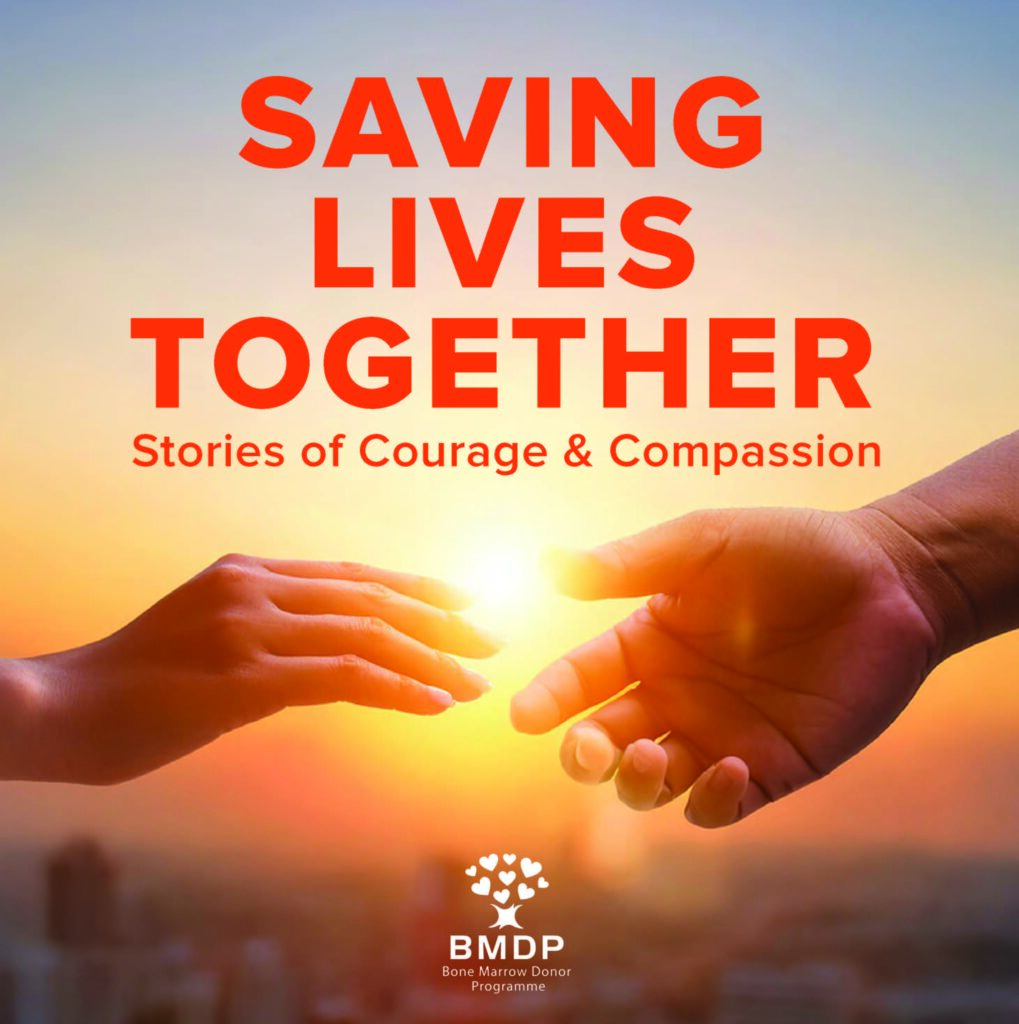
The first was a flagship stories publication featuring real donor and volunteer narratives, intended to serve as BMDP’s primary community-building and recruitment tool. The second was professional video and photography coverage across two major annual events, including a high-profile opening video featuring a senior government minister.
Both projects ran concurrently under tight timelines. A leadership transition on the client side partway through added a further layer of coordination.
Challenge
The engagement presented five distinct operational challenges.
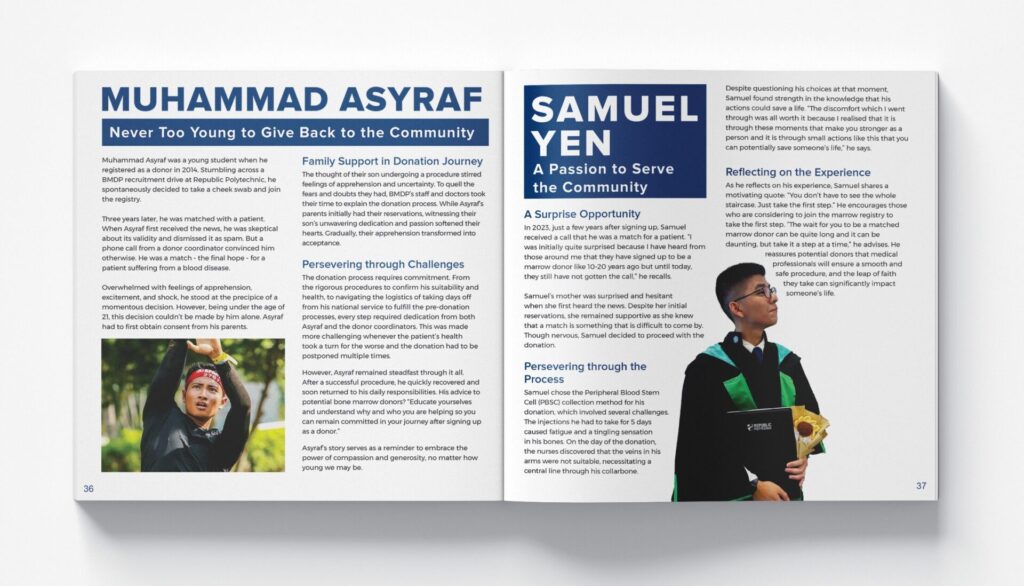
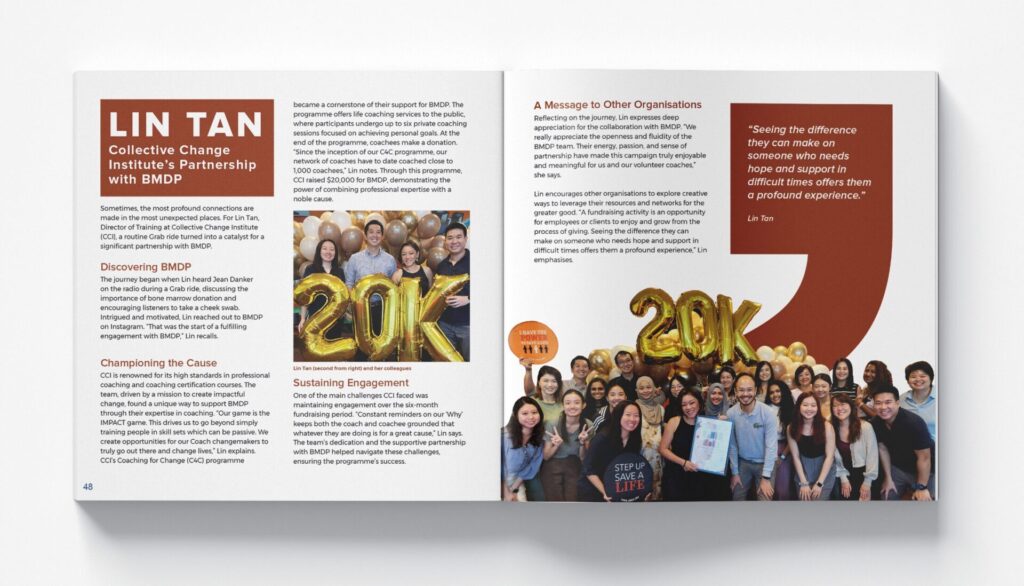
The stories publication brief was intentionally open-ended. BMDP provided approximately 30 raw donor and volunteer narratives in varying states of completion, with no defined structure, pagination, or editorial direction. The agency was expected to propose the narrative framework, tone of voice, writing style, and design approach from scratch, then deliver a publication that would work simultaneously as a 300-copy print book, an interactive digital flipbook with QR-linked content, and a tool for ongoing donor recruitment. There was no template to follow.
The production timeline was compressed. The publication had a target final artwork date approximately 2.5 months from project start, with printed copies required in time for the organisation’s flagship annual event. Within that same window, the team also needed to deliver video and photography across two separate events.
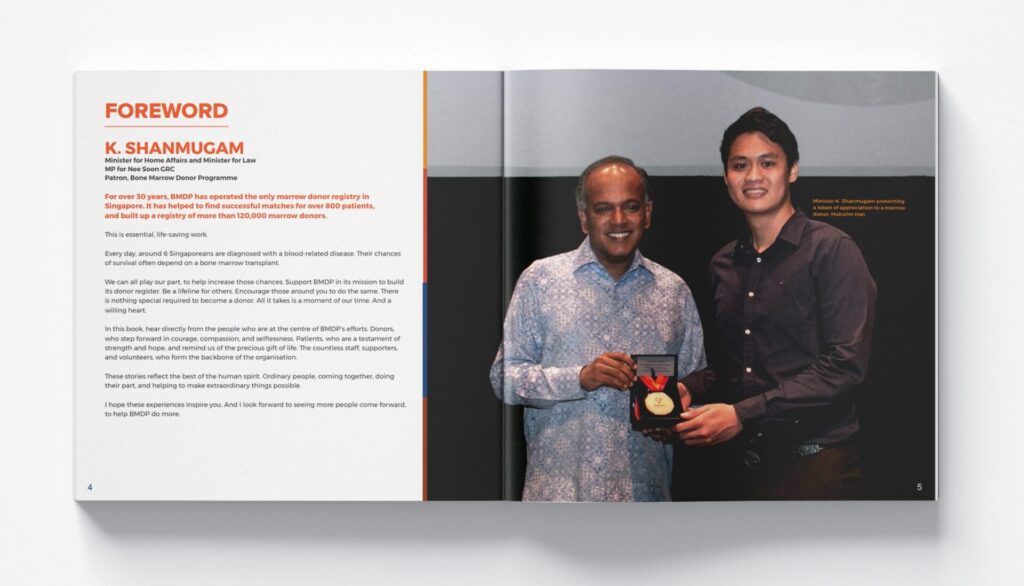
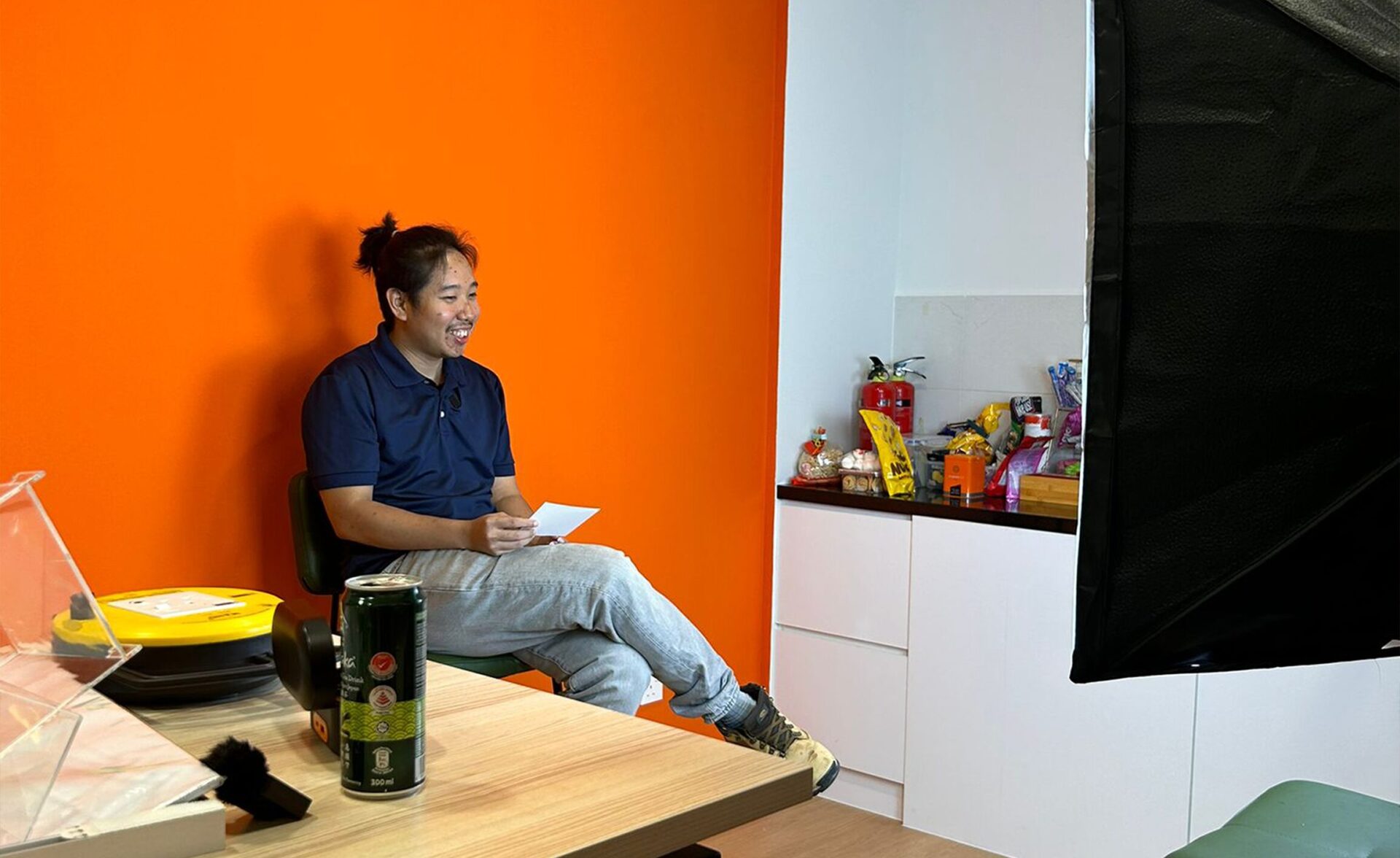
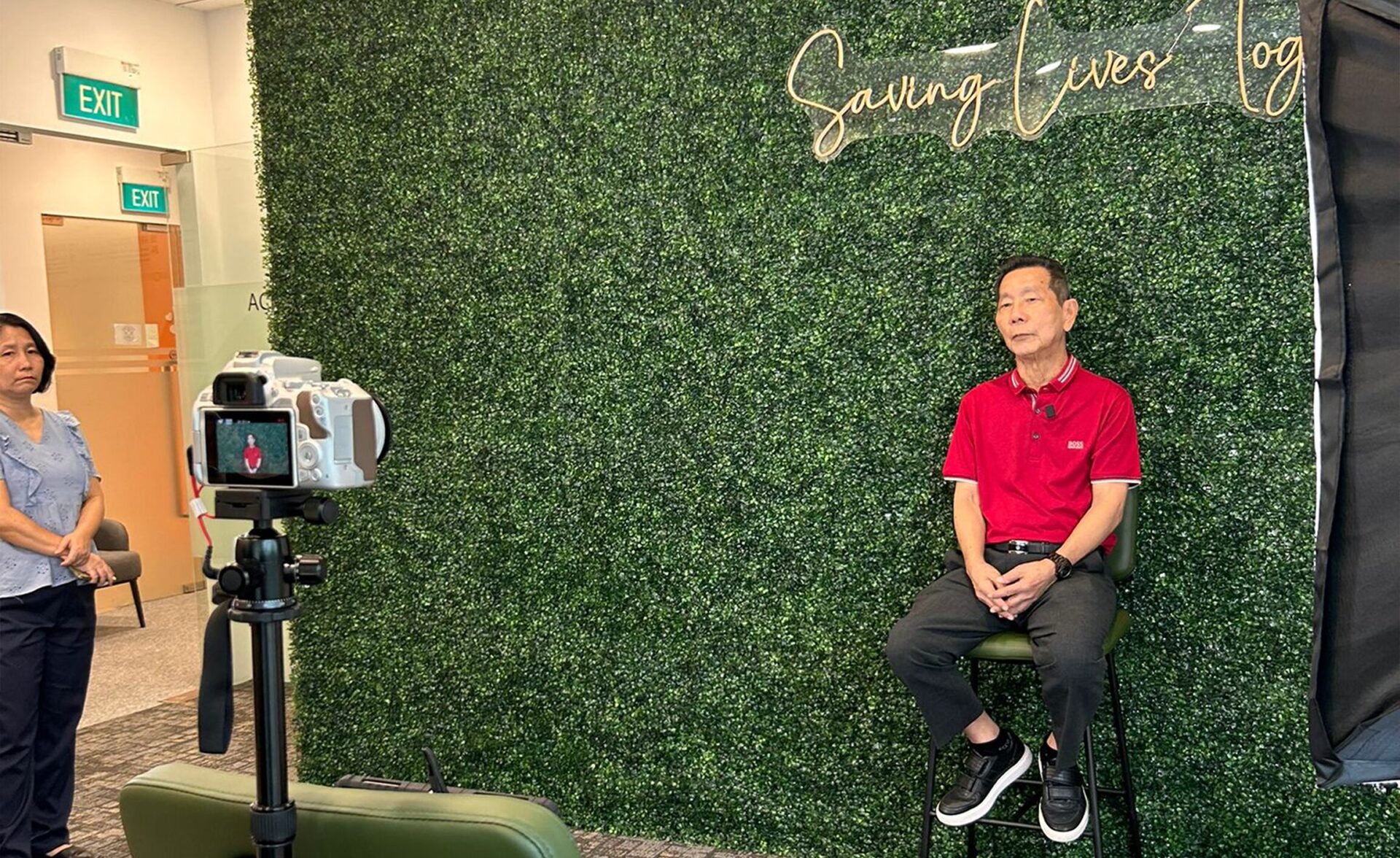
One of the video deliverables involved filming a senior government minister at a government building. This required precise coordination with the minister’s media team, teleprompter scripting, and five proof rounds before final approval. The margin for error in content, tone, and production quality was effectively zero.
Midway through the stories publication project, the original client project lead departed the organisation. The project was handed over to a new team, requiring the agency to manage a seamless knowledge transfer without losing momentum or requiring the client to restart their engagement with the work.
Finally, the publication needed to function across two very different formats: a physical printed book (paperback, 210mm x 210mm, spot UV cover) and an interactive digital flipbook with animated elements and embedded media. Designing for both simultaneously required careful planning to ensure content worked in both contexts without compromise.
Approach
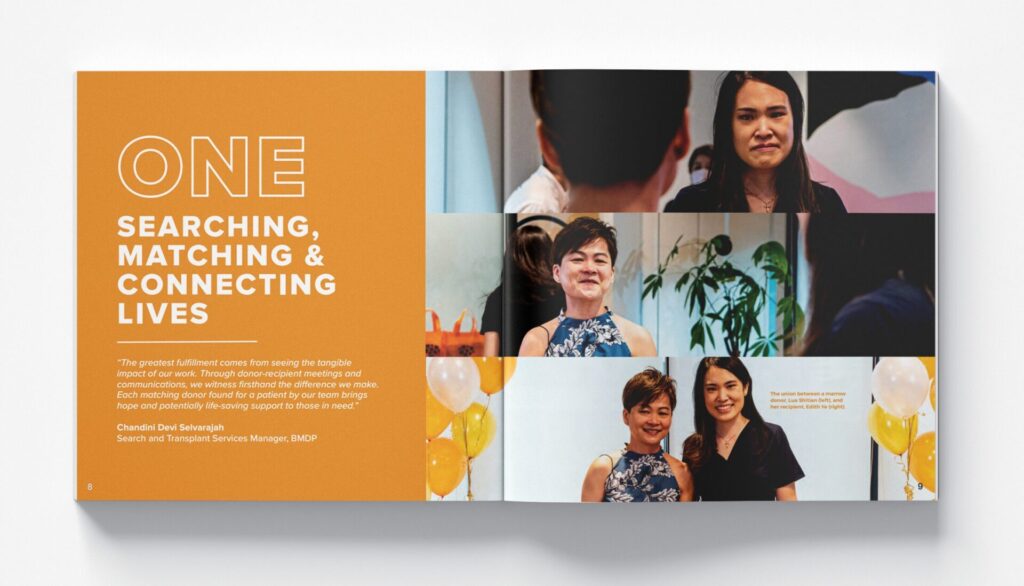
For the stories publication, the agency proposed a layered narrative framework designed to serve multiple audience types. Each spread was structured to be understood in seconds through visual scanning, read in full in approximately two minutes, and extended through QR-linked supplementary content for readers seeking deeper engagement. This allowed the publication to function for both casual readers and committed supporters without compromising the experience for either.
The editorial strategy was built around five principles: foregrounding individual voices through direct quotes, tracing journey narratives from hesitation to commitment, using descriptive language to create emotional immersion, emphasising positive impact to inspire potential donors, and integrating calls-to-action that linked each story to tangible next steps.
The design system was developed to work across both print and digital from the outset. In the print version, QR codes linked to supplementary content. In the digital flipbook, those same codes became clickable links, preserving the full interactive experience without requiring a separate design system.
For the competitive tender presentation, the agency presented two distinct style directions rather than a single recommendation, giving BMDP the ability to choose a creative direction that best reflected their institutional identity.
When the client leadership transition occurred, the agency proactively onboarded the incoming team, conducting a structured walkthrough of the project’s creative direction, outstanding decisions, and timeline within a shared workspace. This ensured the new team could engage meaningfully from day one.
For the ministerial video, the agency coordinated directly with BMDP and the minister’s media team, managing script refinements, teleprompter content, and on-site production logistics. Five proof versions were produced and reviewed before final approval.
Execution
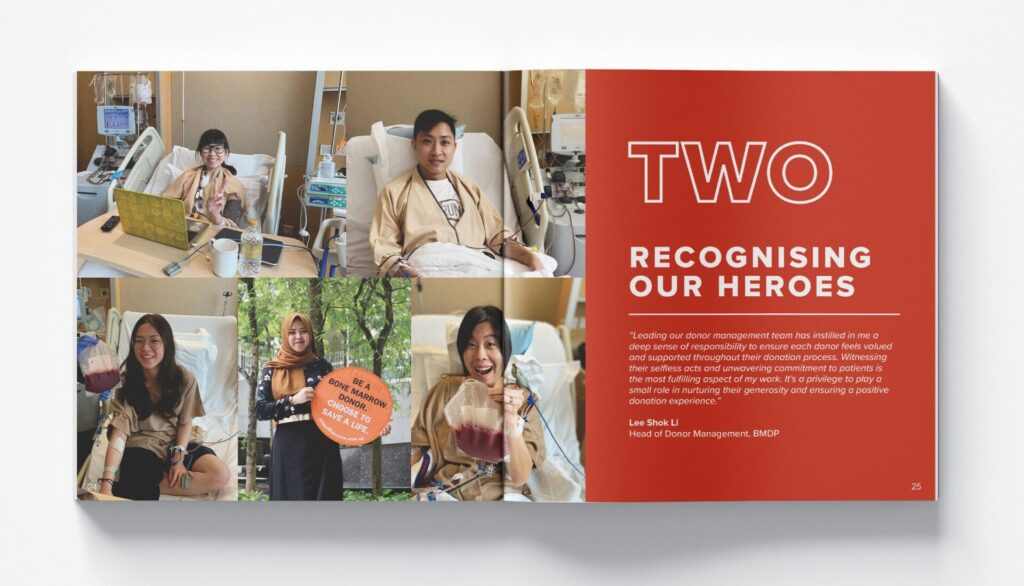
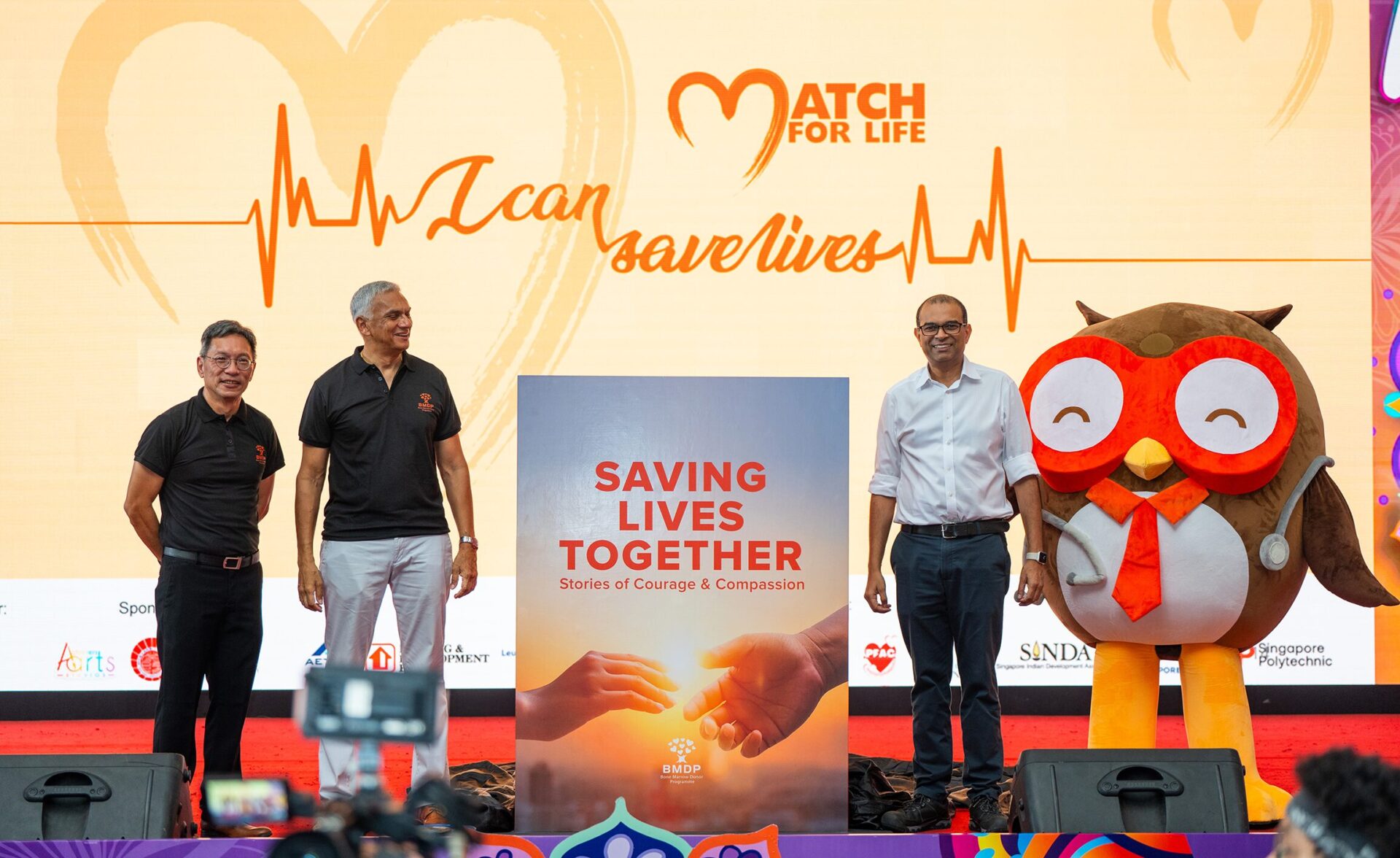
The stories publication involved assessing over 30 raw narratives for resonance and editorial viability, developing the full content architecture, writing and editing all editorial content, designing the layout system with integrated infographics, pull quotes, and QR-linked content, managing multiple design proof rounds, coordinating print production for 300 copies, and producing the interactive digital flipbook. The final publication balanced personal donor journeys with educational content on the bone marrow transplant process, myth-busting sections, and calls-to-action.
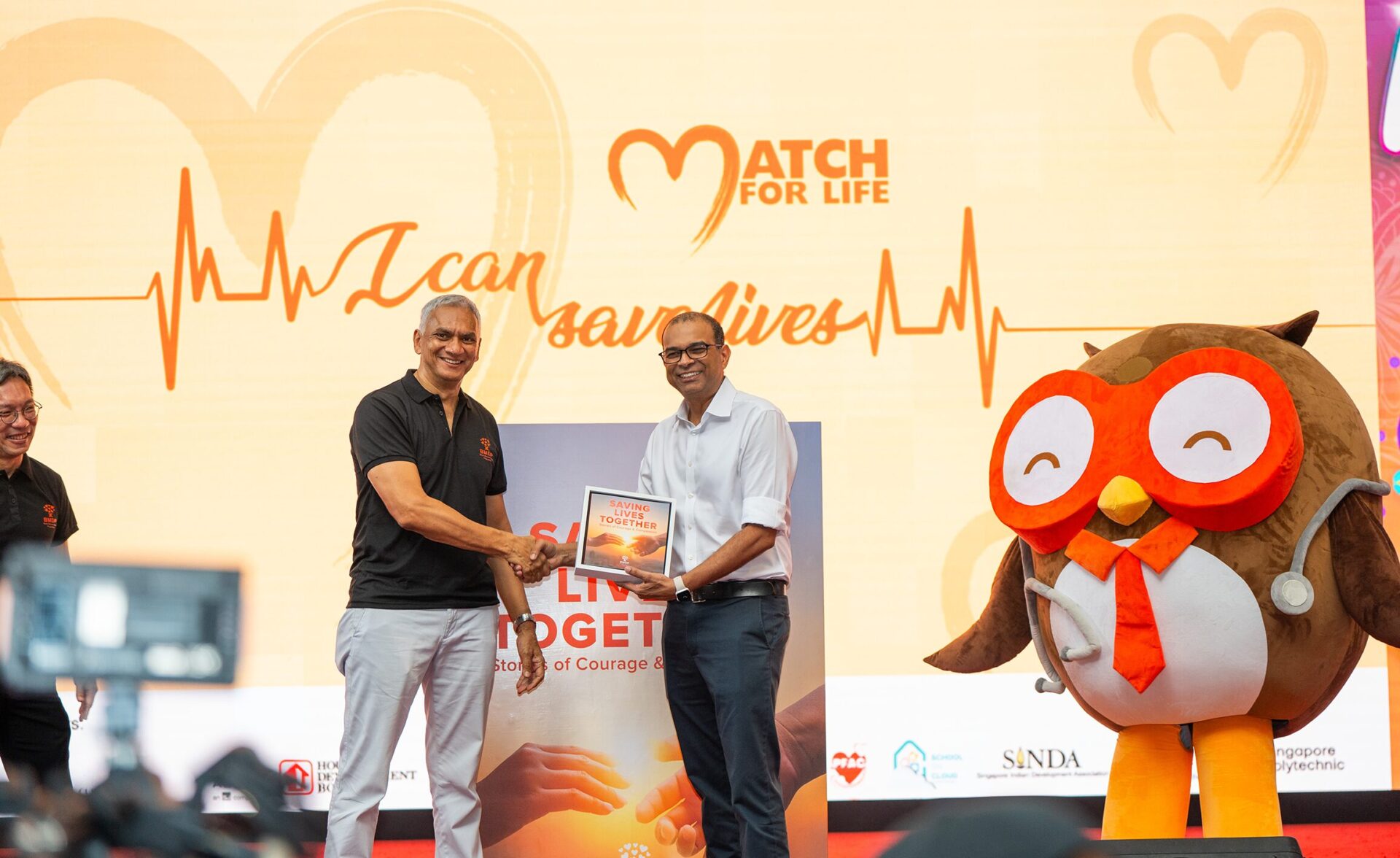
For event coverage, the agency delivered six video and photography deliverables across two events. The Donor-Recipient Meet required a pre-event video, event videography, and event photography. The flagship Match for Life event required the ministerial opening video, event videography, and event photography, with key photos shared within one working day for social media and publicity use. All video deliverables were produced to broadcast standard with HD editing, titling, motion graphics, and subtitles.
The client leadership transition was absorbed with zero impact on the project timeline.
Outcome
The 300-copy print run was delivered ahead of the flagship event. The interactive digital flipbook extended the publication’s reach beyond physical distribution. The ministerial opening video was approved after five proof rounds and used as the centrepiece of BMDP’s flagship annual fundraising and awareness event.
The editorial approach and narrative framework developed for the stories publication was subsequently adopted by BMDP as their template for future donor and volunteer storytelling.
The engagement has since expanded. BMDP awarded two completed tenders in the first year, followed by additional print and content production work, with the scope growing to cover videography, photography, and campaign content on an ongoing basis.
Key Learnings
Nonprofit communications carry a particular kind of pressure: the subject matter is deeply personal, the stakeholders include public figures and government, and the work must inspire action without sensationalising the stories of real people. Delivering reliably in this environment requires editorial judgement and production discipline in equal measure, and the institutional resilience to maintain both when client teams change mid-project.